
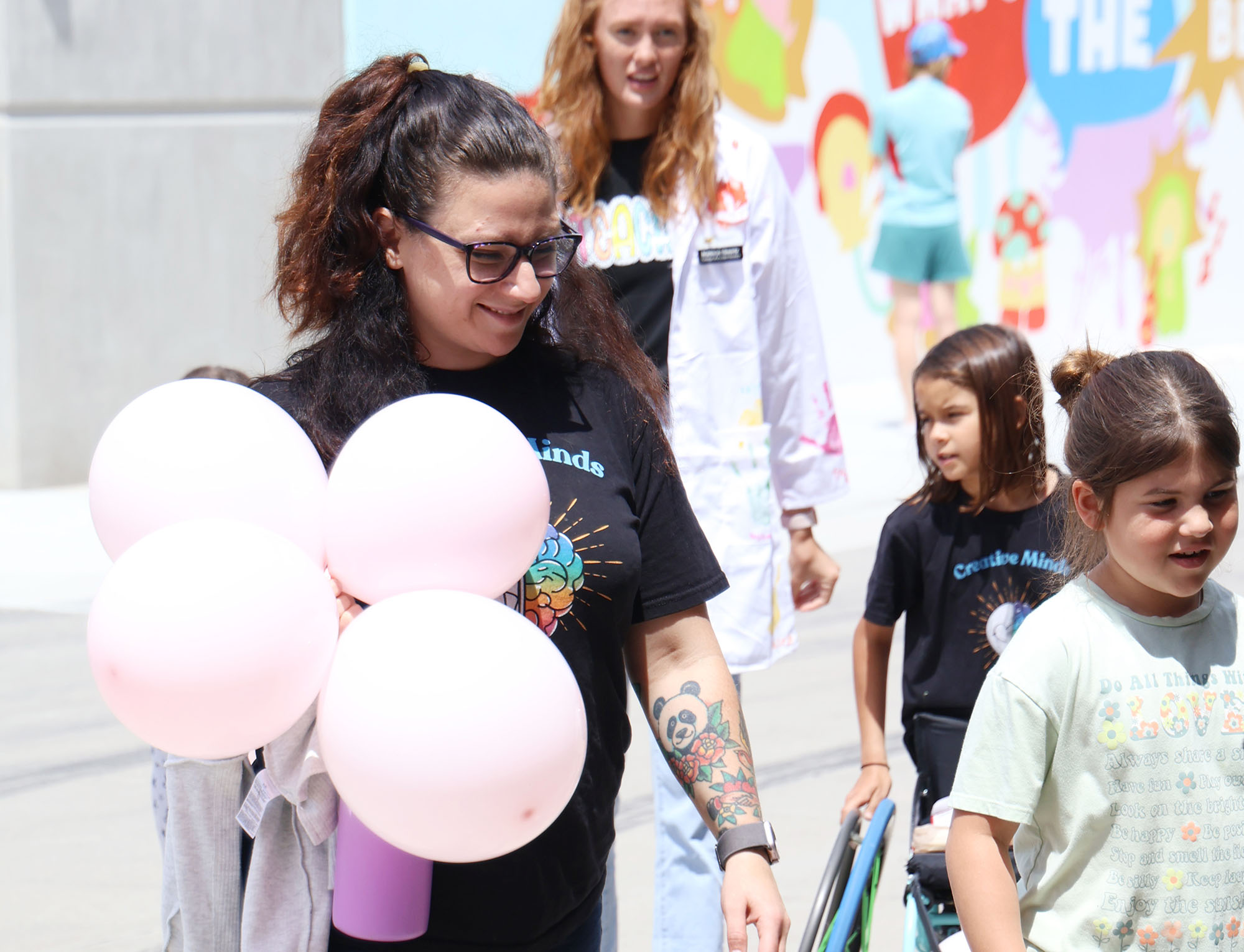
Creative Minds, a Wichita Public Schools K-6th grade vertical classroom, started at Learning Lab in August 2024 with 12 kids. Lead teacher Olivia Sumner helped create the model, which focuses on Project-Based Learning.
The school’s numbers jumped to 16 by the end of its first year, and more than doubled in fall 2025 with 36 kids. The popularity of the model and the academic and social successes of the children enrolled have led the district to create a second location of Creative Minds, which will be located inside the district’s Benton Elementary School starting in fall 2026.
Here Sumner shares how the model is helping kids learn and grow.
How are you feeling at the end of the second full year of Creative Minds?
I could never have imagined the level of excitement and interest we would have in Creative Minds. I knew we were building something special at the beginning of last school year, but the amount of love and support from community members and current families as well as interested families has been overwhelming in the best way.
I’m feeling very bittersweet. This is my last year as a teacher because as we grow and become two Creative Minds spaces, we need someone to help these teachers keep the fidelity of our program, and that will be me. I will be the coordinator of Creative Minds, so we will have four teachers, two in each space. We will never have more than 40 kids in each space to keep the microschool/vertical school model alive. I’m having a lot of feels for not being the main teachers for these kids, some of whom I have taught for five years in a row.
What type of child excels at Creative Minds?
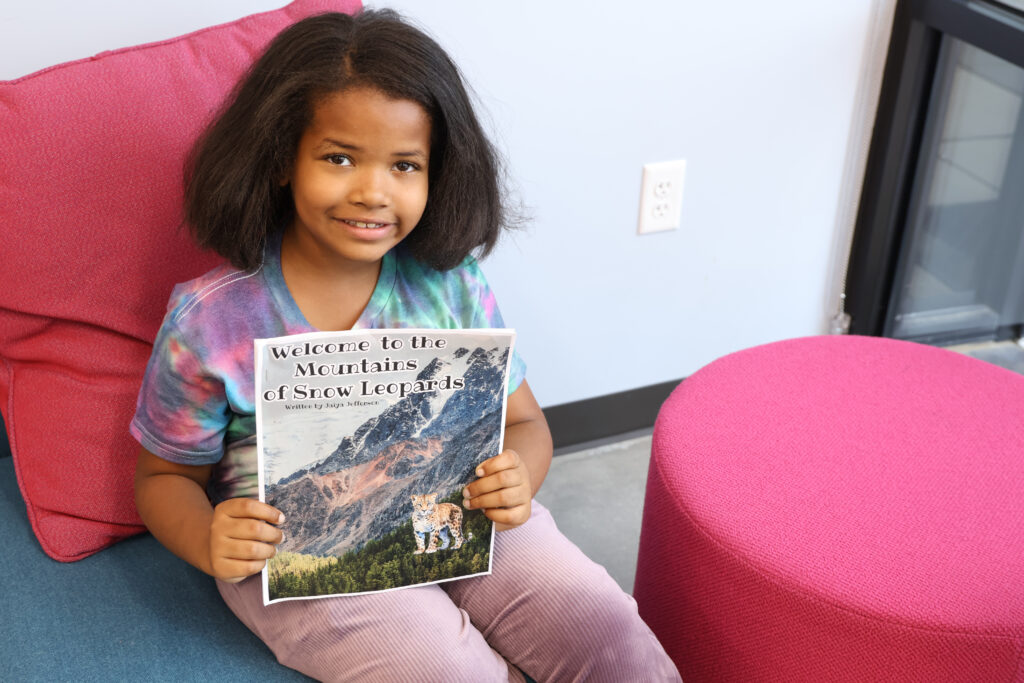
A child who is extremely creative. A child who has and values agency and choice. If your child maybe is struggling with the traditional model of, ‘Here is your desk. Here is the assignment,’ they might thrive here, where they are surrounded by students who have been given the agency to make mistakes and grow in ways that matter to them. Our students show their mastery through things like art, music and podcasts; they interview the community. We truly take learning and put it back in the students’ and the parents’ hands. We are there to facilitate their interests.
How is Creative Minds still meeting district and state requirements when your classroom looks different than the typical classroom?
We are held to the same district and state requirements as any other public school, so we grade to all of the standards for kindergarten through sixth grade for the core subjects. We also give grades for art, music and PE. Our sixth grade has to do the DBQ for social studies. Our test scores themselves, are so exciting. … At the very minimum, we are seeing an increase of scores that match the district’s, and especially in our reading scores, they are far exceeding the district’s growth goals.
To what do you attribute these testing successes?
When students have the freedom to move and the flexibility to learn in ways they need to, whether that be lying down on the floor to read and write in their journal, or maybe they’re pacing in the back of the classroom, but they’re listening, I think that freedom allows them the space to learn and to remember.
We also work a lot in small groups. Very little is done in large class groups, so they are also getting a lot more one-on-one attention with an adult. They are reading materials they are interested in: our novel studies, our books that are not only cross-integrated with our Project Based Learning units but that are highly regarded by kids, that kids are interested in reading.
What are some differences in a typical school day at Creative Minds vs. your standard traditional model?
We do have some similarities as far as what they’re getting, especially for our prereaders – our prereaders are still going to be receiving that fluency and accuracy instruction; they’re getting their decoding. They are receiving all the science-based reading instruction they need to be getting. You’re still going to see math manipulatives. You’re still going to see white boards. Our kids have journals. But even in those spaces where the materials might look same as traditional building, the way the kids are receiving that information looks a lot different.
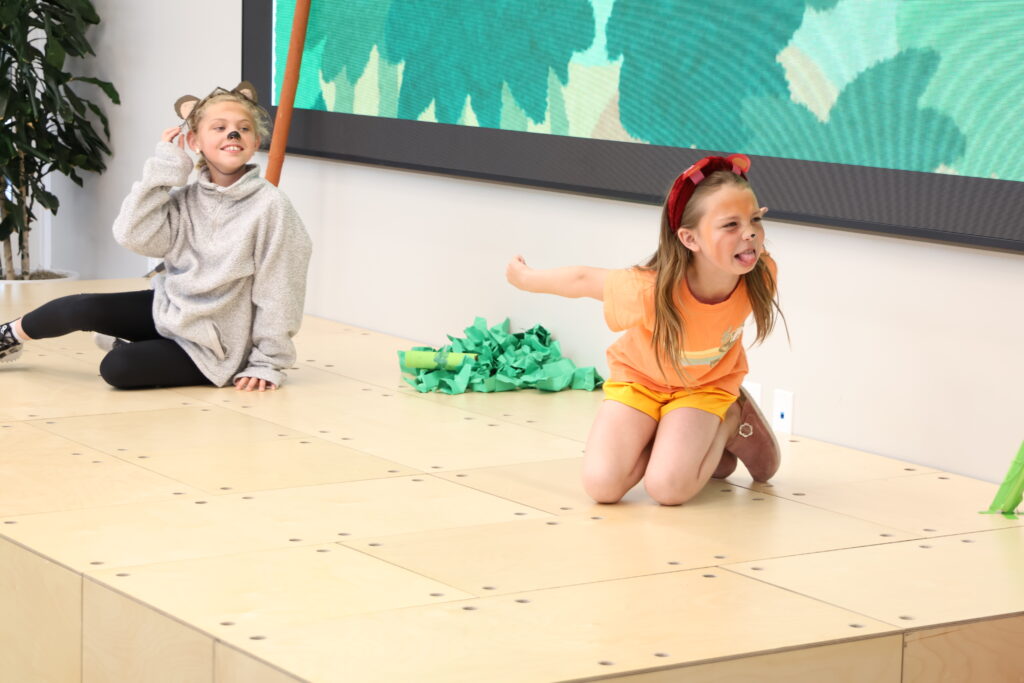
Our youngest prereaders are usually using their whole body to learn how to read. They’re connecting sounds to movement. Our older kids are using a lot of debate-style conversation for them to understand some of the deeper level comprehension skills. We are collaborating with one another constantly, so our room is never quiet.
When you were hired to run the first Creative Minds classroom, did you foresee the growth of the model?
I did not foresee the growth and the demand. I knew people were hungry for a different type of school, but usually the focus goes to private schools when they start to consider something different. So to see so many families and the community so excited and ready to support us in our growth has been awe-inspiring. I truly had no idea how quickly the demand would grow. We have to find all the unicorn teachers out there now.
What kinds of teachers would be a good fit for a future Creative Minds position?
We are interested in teachers who have flexibility in their teaching; they know how to really build relationships first and connect with both students and families. Teachers who are passionate about building up changemakers in their students and teaching to the whole child rather than a strict curriculum.
We need teachers who design and understand design-thinking processes, so they’re constantly iterating the program and making it better. We are constantly changing based on student, parent and community feedback.
How do families apply for a slot for a student at a Creative Minds location?
If someone is interested in coming to visit Creative Minds or joining us, you can schedule a tour or join our waitlist. Because we are a public school, we do the public lottery as required by the state of Kansas; it is a randomized lottery based on open seats. The lottery for the 2026-2027 academic year has passed, but the waitlist is open.
What changes are you seeing in students who have attended Creative Minds for one or two years?
More important than test scores, we are seeing kids grow with their social skills, their leadership; their confidence is skyrocketing. I have kids who have been homeschooled or have had very poor experiences in other buildings. When they get here and get comfortable and realize that their voice matters, that they get a say in their learning, they have choice here, and it’s safe to say the wrong thing or make a mistake, they blossom into these amazing humans that are unstoppable.
All of our kids have so much passion. They know what they want, and they know how they feel, and they will make sure you know it. I feel like that is something we lose sometimes with a more traditional school model because kids have to assimilate; they have to get in line; and they have to follow the rules. But we lead with love here. That allows them to be who they are.